Termite Damage Repair Northern Rivers

Professional timber replacement and repair after termite treatment across Byron Bay, Bangalow, Mullumbimby, Lismore, and all Northern Rivers. Framing, skirting boards, door frames, subfloors, and structural deck timber repaired properly.

Call 0481 457271

What I Repair After Termite Treatment

Once the pest company has done their job, I come in and replace the damaged timber

Wall Framing Replacement

Damaged wall studs, noggings, and top/bottom plates cut out and replaced with treated framing timber. Plasterboard patched and finished after structural repairs.

From $300 per section

Skirting Board Replacement

Termite-eaten skirting boards removed and replaced with matching profiles. New skirting sealed, primed, and painted to match existing finishes.

From $150 per room

Door & Window Frame Repair

Damaged door jambs, architraves, and window frames replaced. Doors rehung and adjusted for proper operation. Weather seals replaced as needed.

From $200 per frame

Subfloor Timber Replacement

Damaged bearers, joists, and stumps replaced with treated or hardwood timber. Floor levelling and restumping coordination for severe damage.

From $500 per section

Deck Structural Repair

Termite-damaged deck joists, bearers, and posts replaced with durable hardwood or treated pine. Decking boards replaced where needed.

From $400 per section

Prevention-Focused Repairs

Physical termite barriers, improved subfloor ventilation, and moisture reduction measures installed during repairs to prevent future termite problems.

Contact for quote

Termite Damage Is a Northern Rivers Reality

The Northern Rivers is one of the worst areas in Australia for termite activity. The combination of warm temperatures, high humidity, and dense vegetation creates ideal conditions for termites, and they are everywhere. Byron Bay, Bangalow, Mullumbimby, Lismore, and the surrounding areas all have significant termite populations, particularly subterranean termites that come up from the soil to feed on the timber in your home.

I see termite damage regularly across the Northern Rivers. It ranges from minor cosmetic damage to skirting boards and door frames through to serious structural compromise of wall framing and subfloor timbers. The tricky thing about termites is that the damage is often hidden inside the timber. A door frame can look perfectly fine on the outside but be completely hollow inside. You only discover it when you push on it and your finger goes straight through.

The first step is always getting a pest company in to treat the termites and eliminate the colony. Once they have cleared the property, that is where I come in. I assess all the damaged timber, determine what needs replacing and what can be repaired, and do the restoration work to get your home back to solid condition.

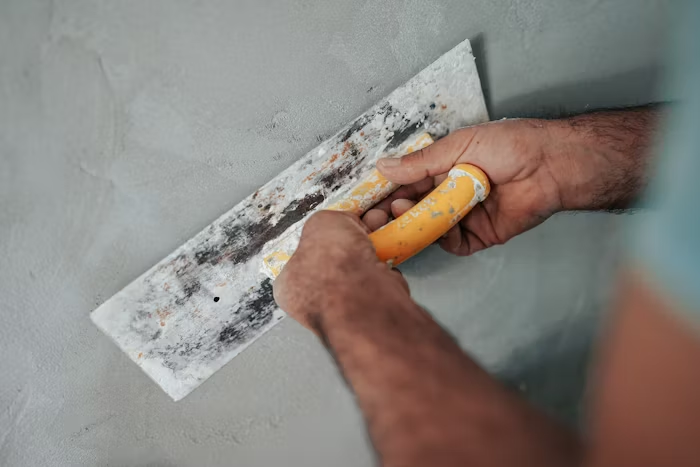
Professional termite damage repair showing timber frame replacement in Northern Rivers home

Had Termite Treatment Done? Time to Repair the Damage.

I will assess the damage, give you a clear quote, and replace all the compromised timber with termite-resistant materials. Call me for an honest assessment.

Call 0481 457271

How to Assess Termite Damage Severity

Understanding what level of damage you are dealing with before the repair work starts

Not all termite damage is equal. Some damage is cosmetic and relatively easy to fix. Other damage is structural and needs careful, methodical repair to ensure your home is safe and sound. Here is how I assess termite damage across the Northern Rivers and what each level of severity means for the repair work.

Cosmetic Damage (Surface Level)

Cosmetic termite damage affects the surface of timber elements without compromising their structural capacity. This includes surface damage to skirting boards where the timber has been eaten on the face but still has a solid core, minor damage to architraves and window sills, and damage to decorative trim and mouldings. Cosmetic damage is the cheapest and easiest to repair. In some cases, I can fill the damaged area with timber filler, sand it back, and repaint. When the damage is more extensive, I remove the affected section and splice in new timber to match. Skirting boards and architraves are usually replaced as complete lengths rather than patched, because a full replacement looks better and is often quicker than trying to patch a section.

Moderate Structural Damage

Moderate structural damage means that structural timber elements have been partially eaten but still retain some of their load-bearing capacity. A wall stud that has been eaten on one face but still has solid timber through the centre might fall into this category. Same with a floor joist that has surface damage but is not hollow. The challenge with moderate damage is determining exactly how much structural capacity remains. I tap the timber with a hammer and probe with a screwdriver to assess the depth of damage. If the core of the timber is still solid and the cross-section loss is less than about 30 percent, it may be possible to sister a new piece of timber alongside the damaged one to restore full structural capacity. This is cheaper than full replacement because I do not have to remove and rebuild around the damaged member.

Severe Structural Damage

Severe structural damage means the timber is hollow, crumbling, or has lost so much cross-section that it can no longer carry its intended load. This is the level of damage that causes visible signs like sagging floors, cracked plasterboard, doors that will not close, and in extreme cases, floors that feel spongy or unsafe underfoot. Severe damage requires full replacement of the affected timber. For wall framing, this means propping the structure above, removing the damaged studs or plates, and installing new treated framing timber. For subfloor damage, it means jacking the floor level, removing the damaged bearers or joists, and installing new hardwood or treated pine replacements. This is more expensive and time-consuming but there is no shortcut when the timber is structurally compromised.

When You Need an Engineer

For extensive structural damage, particularly to main load-bearing walls, roof framing, or subfloor systems, I will advise getting a structural engineer involved. An engineer can assess the overall structural impact of the termite damage and specify exactly what needs to be replaced and how. This is not always necessary but for severe damage to critical structural elements, an engineer's report gives you certainty that the repairs are adequate and it can be important for insurance and resale purposes. I work with engineers across the Northern Rivers and can coordinate the assessment and repair process for you.

Timber Species That Resist Termites

Choosing the right replacement timber reduces the risk of future termite damage

When I replace termite-damaged timber, I always discuss timber selection with the homeowner. Not all timber is equal when it comes to termite resistance, and in a high-risk area like the Northern Rivers, choosing the right replacement timber is an important part of the repair strategy.

Naturally Resistant Hardwoods

Several Australian hardwood species have natural resistance to termites because of the density of the timber and the natural oils and chemicals in the wood. Ironbark is one of the best, it is extremely hard and termites generally avoid it. Spotted gum, turpentine, and tallowwood are also highly resistant and are commonly available from Northern Rivers timber suppliers. These species are ideal for subfloor repairs, deck structural members, and any timber that is close to the ground or in contact with soil.

The trade-off with natural hardwoods is cost. They are more expensive than pine and harder to work with because of their density. But for structural repairs in termite-prone areas, the extra cost is worth it because you are much less likely to have the same problem again. I use hardwood wherever it makes sense from a cost and durability perspective.

Treated Pine

Treated pine is the most common framing timber in Australia and it comes in various treatment levels. For termite resistance, you want H2 treated pine for internal framing, which is treated with a termite-resistant chemical during the manufacturing process. H3 treated pine is for external use above ground, and H4 is for in-ground contact. When I replace termite-damaged wall framing, I use H2 treated pine studs and plates, which is the same specification as what a builder would use in new construction. For subfloor and external repairs, I use H3 or H4 depending on the exposure level.

Treated pine is cheaper than hardwood and easier to work with, making it the practical choice for framing repairs. The treatment chemicals have improved significantly over the years and modern treated pine is both effective against termites and safe for residential use.

Timber to Avoid in Termite-Prone Areas

Untreated pine and softwoods are termite magnets. If your home has untreated pine framing, which is common in older homes built before treatment became standard, it is particularly vulnerable to termite attack. When I find untreated framing during a repair job, I replace it with treated timber even if it has not been damaged yet, because it is only a matter of time before termites find it.

Plantation timber species like radiata pine and hoop pine are also highly susceptible to termites unless they are treated. If these species are used in your home, they should be treated and protected by a chemical barrier system maintained by your pest control company.

Prevention-Focused Repairs

Fixing the damage is one thing. Making sure it does not happen again is just as important.

When I am repairing termite damage, I always look at what can be done during the repair process to reduce the risk of future termite problems. The pest company handles the chemical treatment side, but there are physical measures that a handyman can install or improve during the repair work that make a real difference.

Physical Termite Barriers

Physical barriers are materials installed at the junction between the ground and the building structure that termites cannot eat through, tunnel through, or get around. Stainless steel mesh like Termimesh is one of the most effective. It has openings too small for termites to pass through and it lasts indefinitely. I install stainless steel mesh around pipe penetrations, between concrete slabs and timber framing, and at any point where the new timber meets the existing structure. This is particularly important during subfloor and stump repairs where new timber is close to or in contact with the ground.

Granite guard is another physical barrier option that uses finely graded granite particles too heavy for termites to move and too tightly packed for them to tunnel through. It is installed in the soil around footings and stumps during repairs. Both physical barriers work in conjunction with the chemical treatment your pest company maintains.

Ventilation Improvements

Termites are attracted to moisture. Homes with poor subfloor ventilation trap moisture under the house, creating exactly the conditions termites love. During subfloor repairs, I check the existing ventilation and install additional subfloor vents if needed. Good airflow under the house keeps the subfloor timbers drier and makes the environment less attractive to termites. In the humid Northern Rivers climate, this is particularly important because natural moisture levels are already high.

I also check for and fix any plumbing leaks, blocked drainage, and poor surface water management that could be directing moisture toward the subfloor area. A dripping tap or leaking shower that has been wetting the soil next to the house for months is like putting out a welcome mat for termites.

Working with Pest Control Companies

I coordinate with your pest control company during the repair process. They need to know what timber is being replaced so they can treat the new timber or adjust their barrier system to account for the changes. Some pest companies want to inspect the repair work before it is closed up, particularly if wall framing has been replaced and plasterboard is going back on. I schedule the repair stages so the pest company can do their inspections at the right time. This teamwork approach gives you the best long-term protection.

If you have had termite treatment done and need the damage repaired, or if you have just discovered termite damage and need advice on next steps, call me on 0481 457271. I cover Byron Bay, Bangalow, Mullumbimby, Lismore, Ballina, and all Northern Rivers areas. For related services, check out my deck restoration, mould prevention, and custom carpentry pages.

Insurance and Termite Damage

What you need to know about making a claim for termite damage in Australia

This is the question everyone asks and unfortunately the answer is usually not what they want to hear. Most standard home insurance policies in Australia specifically exclude termite damage. The insurance industry classifies termite damage as a maintenance issue, meaning it is considered the homeowner's responsibility to prevent and manage, similar to general wear and tear.

What Is Typically Not Covered

The termite damage itself, meaning the damaged timber, the cost of replacement, and the repair labour, is almost never covered by standard home insurance. This applies regardless of how much damage there is or how quickly it happened. Whether the termites ate through a single door frame or destroyed half the house framing, the insurance position is generally the same: not covered.

What Might Be Covered

Some insurance policies cover consequential damage caused by termite activity, as opposed to the termite damage itself. For example, if a ceiling collapses because termites ate the roof framing, the ceiling repair and any damage to contents from the collapse might be claimable, even though the termite damage to the roof framing is not. This is a grey area that depends entirely on your specific policy wording. I strongly recommend reading your policy's termite exclusion clause carefully and calling your insurer before assuming anything.

Documentation I Can Provide

If you are making an insurance claim for any aspect of termite damage, I can provide detailed photographic documentation of the damage, a written assessment of the scope of repairs needed, and itemised quotes for the repair work. Having thorough documentation from both the pest company and the repair contractor gives you the best chance of a successful claim for any consequential damage that might be covered. I also keep records of all repair work completed, including before-and-after photos, which can be useful for future sale or refinancing purposes.

Termite Damage Repair Costs in the Northern Rivers

Realistic cost ranges so you can budget for the repair work

Termite damage repair costs vary enormously depending on the extent of damage. Here are realistic cost ranges for the types of repair work I do most often across the Northern Rivers.

Minor Cosmetic Repairs

Replacing skirting boards in one or two rooms, a single door frame, or a few metres of architrave typically costs $150 to $500. This includes removing the damaged timber, sourcing matching profiles, installing the new timber, and finishing with filler, primer, and paint to match the existing surfaces. These are usually half-day jobs.

Moderate Structural Repairs

Replacing several damaged wall studs, a section of bottom plate, or a few floor joists typically costs $500 to $2,000 depending on the scope and the amount of structure that needs to be propped and rebuilt. These jobs involve opening up walls or accessing the subfloor, replacing the damaged members with treated timber, and then closing everything back up with plasterboard, paint, or floor coverings. Allow one to three days depending on the scale.

Extensive Structural Repairs

Major termite damage repair involving multiple wall frames, extensive subfloor work, or a combination of structural and cosmetic repairs across large sections of the house can cost $2,000 to $10,000 or more. These are significant projects that may take a week or more and sometimes require engineering input to ensure the structural repairs are adequate. I provide a detailed written quote with a full scope of work before starting any major repair project so you know exactly what to expect.

Deck Structural Repairs

Deck structural repairs where termites have damaged the bearers, joists, or posts typically cost $400 to $2,500 depending on how many members need replacing and whether the decking boards also need attention. I use hardwood for deck structural repairs because it is exposed to the elements and needs both termite resistance and weather durability. For more extensive deck work, check out my deck restoration service.

For an assessment and quote on termite damage repairs anywhere in the Northern Rivers, call me on 0481 457271. I will come out, assess the damage honestly, and give you a clear quote with no surprises.

Common Termite Damage Locations in Northern Rivers Homes

Termites follow moisture and concealment, and these are the areas they target most often

After years of repairing termite damage across Byron Bay, Bangalow, Mullumbimby, Lismore, and the wider Northern Rivers, I see the same locations coming up repeatedly. Termites are predictable in where they attack because they need moisture, warmth, and timber that they can reach from the soil without being exposed. Knowing where to look helps you catch damage early before it becomes a major structural problem.

Subfloor Bearers and Joists

The subfloor is the most common location for termite damage in Northern Rivers homes, particularly in older houses built on timber stumps. Bearers and joists sit close to the ground and in the humid conditions under a poorly ventilated subfloor, they are prime targets. Subterranean termites build their mud tubes up from the soil onto stumps and directly into the bearer timbers. Because the subfloor is out of sight, the damage can be extensive before anyone notices. I regularly find bearers that are completely hollow, with only a thin outer shell of timber remaining. The first sign is usually a soft or bouncy feeling in the floor above, or visible sagging when you look at the floor line from the side. If your home is on stumps, periodic subfloor inspections are essential, and I always recommend checking this area when I am doing any work under the house.

Door Frames, Especially Bathrooms

Door frames are one of the most commonly damaged elements I replace. Termites love door frames because they provide a continuous timber path from the floor plate up through the jamb and into the head. Bathroom door frames are particularly vulnerable because of the constant moisture exposure. The combination of humidity from showers and the timber-to-floor junction gives termites everything they need. I often discover termite damage in bathroom door frames when the owner notices the door is suddenly sticking or the frame feels soft when they lean against it. The damage is usually worse than it looks because the termites eat the timber from the inside out, leaving the painted surface intact while hollowing out the core.

Window Frames and Sills

Window frames and sills are exposed to both moisture from rain and condensation, making them attractive to termites. Timber window sills that sit on the bottom plate of the wall framing are a direct path for termites moving up from the subfloor through the wall cavity. In the Northern Rivers, where driving rain is common during storm season, window frames also suffer from water ingress that keeps the timber damp and even more appealing to termites. I see this most often on the southern and western faces of homes where weather exposure is greatest.

Skirting Boards

Skirting boards are a favourite termite target because they sit directly against the bottom plate of the wall, giving termites easy access from the framing into the visible timber. In many Northern Rivers homes, particularly older weatherboard and fibro houses, termites travel up through the wall cavity and into the skirting boards without being detected. Skirting board damage is often the first visible sign that termites are active in the wall framing behind. When I find termite-damaged skirting boards, I always investigate the wall framing behind them because the skirting damage is usually just the tip of the iceberg.

Roof Timbers

Roof framing damage is less common than subfloor or wall damage but it does occur, particularly in homes where termites have been active for a long time without detection. Termites can travel up through the wall framing and into the roof space where they attack rafters, battens, and ridge boards. Roof timber damage is serious because compromised rafters affect the structural integrity of the entire roof. Signs include cracked ceiling plaster along the lines of roof framing, visible sagging in the roofline when viewed from outside, and in severe cases, a ceiling that feels soft or spongy when pushed. If you suspect roof timber damage, it needs professional assessment before any repair work begins.

Deck Posts Where They Meet the Ground

Deck posts are extremely vulnerable at the point where they meet the ground or sit in stirrups on concrete footings. This is where moisture is highest and where termites can move from the soil into the timber structure most easily. Across the Northern Rivers, I see deck posts that have been completely eaten through at their base while still looking solid higher up. The risk is that a compromised post can fail suddenly under load, particularly during a storm or when the deck is full of people. For deck structural repairs and prevention strategies, check my deck restoration page. If you suspect termite damage in any of these locations, call me on 0481 457271 for an assessment.

Signs You Need Termite Damage Repair

How to tell if termites have been at work in your home

Termite damage is often hidden, but there are telltale signs that experienced homeowners and pest inspectors look for. If you notice any of the following in your Northern Rivers home, it is worth getting both a pest inspection and a damage assessment done. The earlier you catch termite damage, the less extensive and expensive the repair work will be.

Hollow-Sounding Timber

This is the classic test. Tap on timber elements like door frames, window sills, skirting boards, and exposed structural timber with your knuckles or a screwdriver handle. Sound timber produces a solid, resonant thud. Termite-damaged timber sounds hollow, papery, or dull because the inside has been eaten away. I use this technique on every job to map the extent of damage. You can do a quick check yourself by tapping along your skirting boards and door frames. If the sound changes from solid to hollow partway along a piece of timber, there is a good chance termites have been feeding in that section.

Sagging Floors

When subfloor bearers and joists are damaged by termites, the floor above starts to sag, dip, or feel spongy underfoot. You might notice it as a soft spot when you walk across a particular area, or you might see the floor line dipping when you look at it from the side. In severe cases, furniture starts to lean or roll because the floor is no longer level. Sagging floors in a Northern Rivers home should always be investigated because the damage to the subfloor structure can be extensive by the time the floor starts moving. I have seen cases where a small soft spot in the floor turned out to be multiple bearers that were completely destroyed underneath.

Doors and Windows That Suddenly Stick

If a door or window that used to open and close smoothly suddenly starts sticking, jamming, or will not latch properly, termite damage to the frame or surrounding wall structure could be the cause. Termites eating through a door frame change its shape, causing the door to sit differently in the opening. Similarly, damage to wall framing can cause subtle shifts in the wall geometry that affect how windows and doors operate. While sticking doors and windows can have other causes like seasonal humidity changes or settlement, a sudden change that does not resolve itself is worth investigating for termite damage.

Visible Mud Tubes

Subterranean termites build mud tubes, also called mud leads, to travel between their colony in the soil and the timber they are feeding on. These tubes are roughly pencil-width and made from a mixture of soil, timber particles, and termite saliva. They are usually found running up the surface of concrete stumps, foundations, and walls, particularly in the subfloor area. If you see mud tubes on any surface in or around your home, termites are active and you need pest treatment immediately followed by a damage assessment. Do not disturb the tubes before the pest company inspects them, because breaking the tubes can cause the termites to relocate and make treatment more difficult.

Crumbling Timber When Probed

If you push a screwdriver or knife into timber and it crumbles easily, goes in with little resistance, or the timber breaks apart in layers, it has been severely damaged by termites. Healthy timber resists penetration and holds its structure when probed. Termite-damaged timber often falls apart in thin sheets or crumbles into a powdery consistency. This is the simplest way to confirm suspected damage and assess severity. I always probe suspect timber during my assessments to determine whether repair or replacement is needed.

If you have noticed any of these signs in your home, the first step is a professional pest inspection to determine whether termites are still active. Once the pest company has cleared the property, call me on 0481 457271 to assess the damage and provide a repair quote. I cover all Northern Rivers areas including Byron Bay, Bangalow, Mullumbimby, Lismore, Ballina, Lennox Head, Ocean Shores, and Tweed Heads.
Frequently Asked Questions

How much does termite damage repair cost in the Northern Rivers?

Costs vary with severity. Minor repairs like skirting boards or a door frame typically cost $150-$400. Moderate structural work like replacing wall framing or subfloor timbers ranges from $500-$3,000 or more. I provide a detailed quote after assessing the damage in person. Call 0481 457271 to book an assessment.

Do you do pest treatment or just the repairs?

I do the repair work only. Termite treatment must be done by a licensed pest control company before repair work begins. There is no point replacing timber until termites are eliminated. I work with several pest companies across the Northern Rivers and can recommend one. Once treatment is complete, I handle all timber replacement. Call 0481 457271.

How do I know if termite damage is structural?

Structural damage affects load-bearing elements like wall studs, floor joists, and roof framing. Signs include hollow-sounding timber, sagging floors or ceilings, doors that stick, and cracked plasterboard. I assess damage extent and determine what needs replacing. For major structural work, I advise if an engineer's report is needed. Call 0481 457271 for an assessment.

What timber do you use for termite damage repairs?

For structural work I use H2 treated pine framing. For visible elements I match existing profiles. For subfloor and deck repairs in high-risk areas, I use naturally resistant hardwoods like ironbark, spotted gum, or turpentine, or H3/H4 treated pine. I also install physical termite barriers where new timber meets the ground. Call 0481 457271 to discuss options.

Can termite damaged timber be repaired or does it need replacing?

It depends on severity. Surface damage with a solid core can sometimes be treated with hardener and filler. Hollow, crumbly, or structurally compromised timber must be replaced. I assess each piece individually and only replace what is necessary. This keeps costs down while ensuring everything is structurally sound. Call 0481 457271 for an honest assessment.

Will my insurance cover termite damage repairs?

Most Australian home insurance policies exclude termite damage, classifying it as a maintenance issue. Some policies cover secondary damage like ceiling collapse caused by weakened framing. Check your specific policy wording. I provide detailed photos, assessments, and itemised quotes to support any claim. Call 0481 457271 for a documented assessment.